


Description
The National Institutes of Health (NIH) held the following scientific webinar, showcasing research supported by the U.S.–Japan Brain Research Cooperative Program (BRCP), and collaborations with the NIH BRAIN Initiative and the Japan Brain/MINDS 2.0 Program.
When: Tuesday, December 9, 2025: 6:00 PM – 7:15 PM EST, U.S. | Wednesday, December 10, 2025: 8:00 AM – 9:15 AM JST, Japan.
Location: Virtual Meeting | This event has passed.
Organized By: The National Institutes of Health (USA), and the National Institute for Physiological Sciences (Japan)
Purpose: To exchange scientific advances in neurological research and to highlight studies that are supported within the program, by the U.S. and Japan.
Program Overview:
In the year 2000, the National Institute of Neurological Disorders and Stroke (NINDS) at the National Institutes of Health (NIH), U.S., and the National Institute for Physiological Sciences (NIPS), Okazaki National Research Institutes, Japan, launched a Brain Research Cooperative Program (BRCP) program under an umbrella agreement of “Cooperation in Research and Development in Science and Technology” between the governments of the U.S. and Japan. The purpose of the BRCP is to promote scientist exchange, training, and collaborations in basic, translational and clinical research between neuroscientists from the U.S. and Japan.
For additional information about the program, please see:
Participating NIH ICs: NINDS, NCCIH, NIBIB, NIDA, NIDCD, NIEHS, NIMH
Presenters
Dr. John Ngai
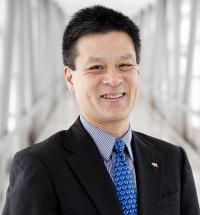
Dr. John Ngai
BRAIN Initiative Director and Senior Investigator | NIH-NINDS
Dr. John J. Ngai joined the NIH in 2020 as the Director of the NIH’s Brain Research through Advancing Innovative Neurotechnologies® (BRAIN) Initiative. Dr. Ngai earned his bachelor’s degree in chemistry and biology from Pomona College in Claremont, California, and his Ph.D. in biology from the California Institute of Technology (Caltech) in Pasadena. He completed postdoctoral research at Caltech and at the Columbia University College of Physicians and Surgeons before beginning his faculty position at the University of California, Berkeley. During more than 25 years as a Berkeley faculty member, Dr. Ngai trained 20 undergraduate students, 24 graduate students, and 15 postdoctoral fellows, in addition to teaching well over 1,000 students in the classroom. His work has led to the publication of more than 70 scientific articles in leading journals and 10 U.S. and international patents. Dr. Ngai has received numerous awards, including those from the Sloan Foundation, Pew Charitable Trusts, and the McKnight Endowment Fund for Neuroscience. As a faculty member, Dr. Ngai served as director of Berkeley’s Neuroscience Graduate Program and the Helen Wills Neuroscience Institute. He has also provided extensive service on NIH study sections, councils, and steering groups, including as a previous co-chair of the NIH BRAIN Initiative Cell Census Consortium Steering Group. Dr. Ngai now oversees the long-term strategy and day-to-day operations of the NIH BRAIN Initiative as it takes on the challenges of the next five-year plan.
Dr. Aaron Gitler
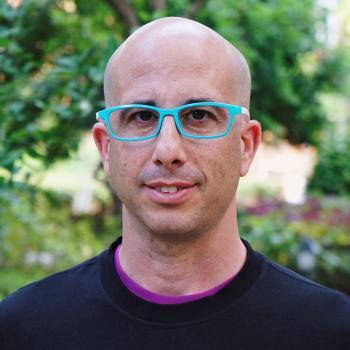
Dr. Aaron Gitler
Stanford Medicine Basic Science Professor | Standford University
Dr. Aaron Gitler is the Stanford Medicine Basic Science Professor in the Department of Genetics at Stanford University. He received his B.S. degree from Penn State University and completed his Ph.D. studies on cardiovascular development in the laboratory of Dr. Jonathan Epstein at the University of Pennsylvania. He then performed his postdoctoral training with Dr. Susan Lindquist at the Whitehead Institute for Biomedical Research and MIT. In 2007, he established his laboratory at the University of Pennsylvania and moved to Stanford in 2012. His laboratory has been using a combination of yeast and human genetics approaches to investigate pathogenic mechanisms of ALS.
Dr. Shigeo Okabe
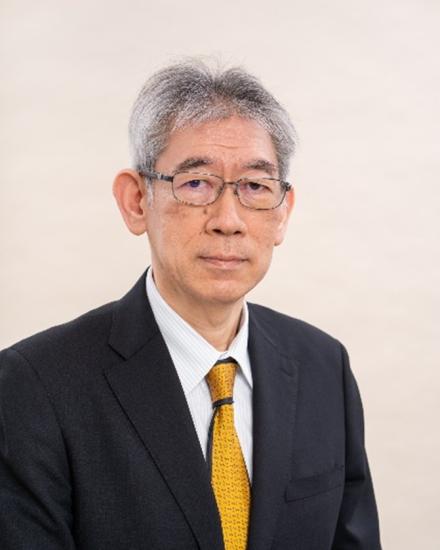
Dr. Shigeo Okabe
Professor and Director | University of Tokyo, The RIKEN Center for Brain Science (CBS)
Dr. Shigeo Okabe is a Professor at the University of Tokyo and the Director of the RIKEN Center for Brain Science (CBS). He graduated from the University of Tokyo Faculty of Medicine and earned his Ph.D. from the Graduate School of Medicine at the same institution. He began his academic career as an Assistant Professor in the laboratory of Professor Nobutaka Hirokawa at the University of Tokyo. Dr. Okabe conducted research in the United States as a Visiting Associate at NINDS/NIH. Upon returning to Japan, he became a Principal Investigator at the National Institute of Bioscience and Human-Technology in Tsukuba. In 1999, he was appointed Professor in the Department of Cell Biology at Tokyo Medical and Dental University. He returned to the University of Tokyo in 2007 as a Full Professor in the School of Medicine. Dr. Okabe has also played major roles in university leadership. He served as Dean of the Graduate School of Medicine from 2021 to 2023 and as Vice President of the University of Tokyo from 2023 to 2025. Since 2025, he has served as Director of the RIKEN Center for Brain Science. Dr. Okabe’s research focuses on the development and remodeling of neural networks in the developing brain, the molecular mechanisms underlying synapse assembly and plasticity, and synaptic dysfunction in neurodevelopmental and psychiatric disorders. His contributions to neuroscience have been recognized through numerous honors, including the Tsukahara Nakaakira Award (2004), the Seto Award (2010), the Naito Memorial Award (2020), the Takeda Prize for Medical Science (2022), the Medal with Purple Ribbon (2022), the Fujiwara Award (2023), and the Japan Academy Prize (2025).
Dr. Tomomi Shimogori
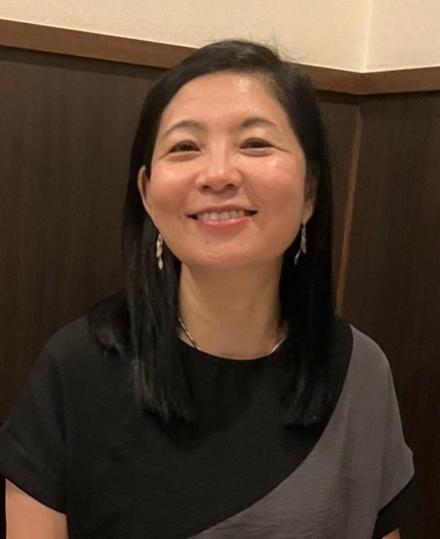
Dr. Tomomi Shimogori
Deputy Director | The RIKEN Center for Brain Science (CBS)
Dr. Tomomi Shimogori is a Deputy Director at the RIKEN Center for Brain Science (CBS) and an internationally recognized expert in developmental and comparative neuroscience. She received her Ph.D. in Pharmaceutical Sciences under Dr. Kazuei Igarashi and completed postdoctoral training with Dr. Elizabeth Grove at the University of Chicago, where she pioneered in utero electroporation now a widely used method in neuroscience and demonstrated FGF8’s organizer role in cortical patterning. Since starting her independent laboratory at RIKEN in 2004, Dr. Shimogori has investigated how thalamocortical input shapes cortical cell identity and circuit assembly. Her group developed molecular probes to label thalamocortical contact sites and combined these with high-throughput in situ hybridization and RNA profiling to uncover gene programs underlying cortical development. Using in utero gene transfer, her team has identified causal mechanisms driving thalamocortical-dependent cell specification. Expanding into primate neuroscience, Dr. Shimogori created the first open-access marmoset brain gene expression atlas, now a widely used global resource. She currently leads cross-species spatial transcriptomic studies aimed at revealing evolutionary innovations in brain development and primate-specific circuit organization. Dr. Shimogori also contributes to major international initiatives as Vice Project Leader of Brain/MINDS 2.0 and former Chair of the HFSP Research Grant Committee. Her scientific vision, technological innovation, and global leadership continue to advance the fields of developmental and comparative brain science.
Contact Info:
For inquiries related to the program, contact the U.S. - Japan BRCP Team.
Stay connected with us! Subscribe to our mailing list to receive the latest updates from the NINDS.